NASA might be an American organization, but they’re not doing their work alone. The organization has a rich history of international collaboration that extends into the present day!
And seeing as it’s World Space Week, I wanted to highlight some projects going on right now.
The International Space Station (ISS)
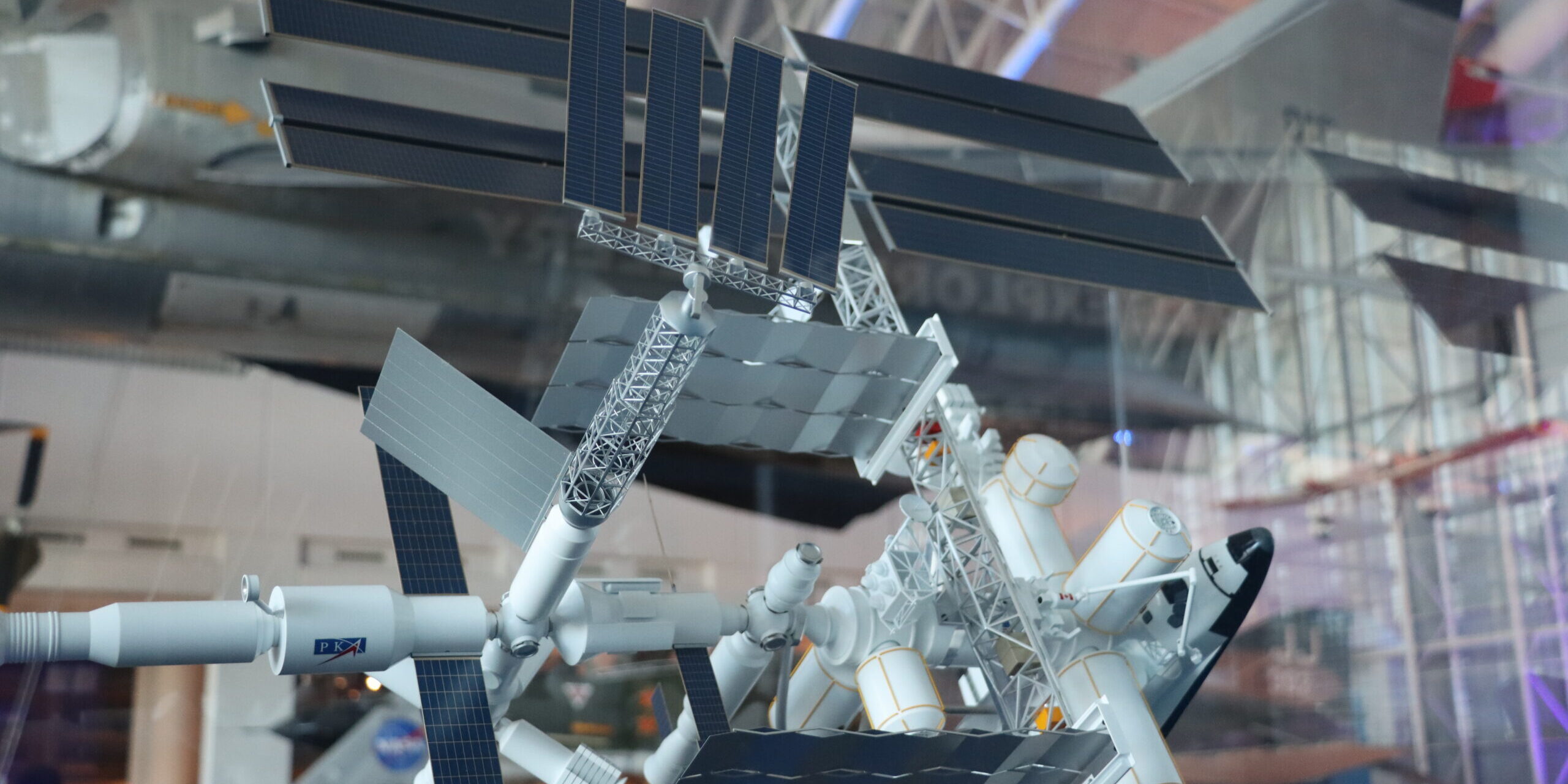
Of course, everybody knows about the collaborative nature of the International Space Station, given that it’s literally called the International Space Station. The collective work of 15 different countries and 5 international space agencies, and going on 28 years in low Earth orbit, the ISS has brought us some of the most important scientific breakthroughs of all time.
My favorite ISS-themed fun fact is that if you were born after the year 2000, you have never lived on Earth with every single human being. We’ve had continuous occupation in outer space since then.
The Artemis Missions
We’ve also had international collaborations on the crews of the most recent Artemis missions! There’s Canadian Space Agency astronaut Jeremy Hansen from Artemis 2, and now European Space Agency astronaut Luca Parmitan for the upcoming Artemis 3 mission.
And speaking of Artemis: The Artemis Accords are a collaborative agreement written and proposed by NASA to “support the safe and sustainable exploration of space” (nasa.gov) as we move into further work towards Lunar and Martian surface research.
As of September 25th, the Accords have been signed by 76 countries, which is a great sign for the future of human space exploration.
How YOU Can Get Involved!
However, there’s another aspect of NASA’s international collaboration that most people might not know about, and it involves you! NASA has many opportunities for scientific initiatives that are open to anyone in the public, whether you live in America or not. On their website you can find 49 currently active “Citizen Science” projects, giving everybody the opportunity to make a major impact on the world of NASA science. You could be the amateur astronomer to discover the Petrova Line!
Wait actually on second thought I hope that you don’t do that.
The Citizen Science Projects – which don’t actually require American citizenship, that’s just the term they use to denote amateur scientific projects – are available in 22 different languages, and cover a wide variety of topics under NASA’s scientific purview. And I’d imagine that there will be even more observation-based projects popping up once the Nancy Grace Roman Space Telescope starts its surveying in early 2027, as that data will be publicly available too.
Conclusion
NASA has fostered a thriving global community of scientists, citizens, artists, and whoever else you can think of. The work done within the organization wouldn’t be possible without these international collaborations, and it’s beautiful to see the way that scientific exploration brings people together.
Happy World Space Week 2026!!