In a time with so much impressive technology integral to daily life, it can be easy to take for granted things that once had to be invented. Whether it’s life-changing medical devices or simply personal comfort improvements, NASA research has been being used to improve life on and off the Earth for decades.
That’s why we wanted to highlight some of the incredible things that NASA research has helped create over the years. To share why it matters, and how the work of this organization extends far beyond just space travel and science. Join us to learn some of the reasons why you should say #ThanksNASA!
Introduction
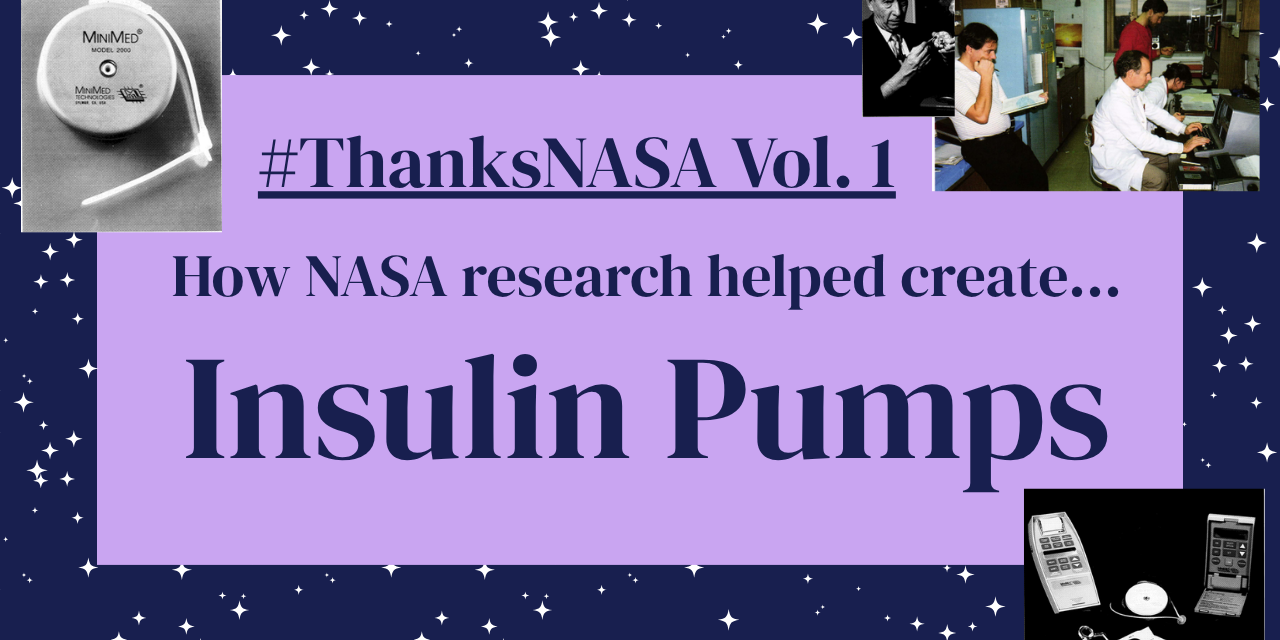
The invention and implementation of portable insulin pumps revolutionized life for many people dealing with diabetes. Where they previously had to structure their days around when and where they could safely do their injections, having a device that attaches to the body and distributes insulin over the course of the day gave people a level of freedom that was unprecedented before. This is due in part to a small piece of technology invented for the NASA Viking Mars Mission.
The Viking Mars Mission
The Viking Landers had a plethora of different scientific instruments on them, some of which were designed to search for signs of life on Mars. One such instrument, described in a 1988 article titled “Insulin Delivery System” from NASA Spinoff’s Health and Medicine page, was “a tiny, microminiaturized fluid control system” (66). This technology was implemented for biomedical purposes by the Johns Hopkins Applied Physics Laboratory and Johns Hopkins Medical Institutions, who collaborated with NASA to create a device they called a “Programmable Implantable Medication System (PIMS).” Within this device, the fluid control system that was a part of the Viking Lander was adapted to be utilized for the distribution of insulin inside the human body. While the PIMS differed from modern insulin pumps in many ways—it was a surgical implant that was designed to go into the patient’s abdomen and then be refilled by hypodermic injection four times a year—it was an integral stepping stone in the development of this life-changing technology.
Much of the work done on the 1976 Viking Mars Mission was done right here in Hampton at the NASA Langley Research Center. This means that not only did Langley Research Center help facilitate a mission that dramatically changed the way that we explore other planets, but they also helped to create a piece of technology that dramatically changed the lives of so many Americans in the late 1980s!
Further NASA Contributions
Volume 8, Number 1 of the Johns Hopkins APL Technical Digest also notes NASA’s financial contribution to the project. The organization provided a total of $3 million (which is approximately $8.8 million when adjusted for inflation) for the development of the technology, with this funding coming from its Technological Utilization Program. This article was published in 1987, and attributes the communications technology implemented for the project as traceable to NASA research as well.
The implanted aspect of the device—which was about the size of a hockey puck and called an “Implantable Programmable Infusion Pump (IPIP)”—contained “a computer; a hydraulic system consisting of a pump, valves, and a reservoir that holds a three-month supply of concentrated insulin; an antenna to receive and process program signals; and a command and telemetry system” (McCloskey 156). This command and telemetry system is important because it’s the way in which the patient or doctor can adjust the dosage of insulin being distributed in real time. This technology is said to have “stemmed directly from those originally worked out for the remote command and control of satellites” (McCloskey 157).
Conclusion
While the actual system design and creation of the PIMS was done at Johns Hopkins Applied Physics Laboratory, there is no denying NASA’s impact. Treatment for diabetes has come a long way since the 1980s, and many different organizations have worked hard over the years to improve the lives of those living with the condition. The development of the PIMS stands out in history as proof that more great things can be accomplished with great minds working together!
Come visit us in-person to explore some more of the incredible technology that NASA has helped to create both in the past and looking towards the future.
———————-
Interested in reading deeper about this topic? Here are some relevant articles/sources:
- “Insulin Delivery System” from NASA Spinoff Health and Medicine
- “Insulin Treatment Enters The Space Age” by William McCloskey
- CONTENT WARNING: This article contains a full-color photo of the first surgical implementation of the PIMS device. It is in the bottom right-hand corner of page 160, or page five of the PDF scan.
- “Biomedical Applications of NASA Technology” Report by Donald S. Friedman
Written by: Meghan Dincler, VASSC Marketing and Public Relations Coordinator